James Hardie Garage Conversion ADU: The Sacramento Owner’s Guide
We stock and install James Hardie-compatible siding, trim, and weather-barrier components for garage conversion ADUs across Sacramento, with most siding and trim replacements running $1,200 to $4,800 installed depending on the damaged area and Hardie product line. If a section of HardiePlank lap siding has cracked, a HardieTrim board has warped, or the flashing behind your HardiePanel has failed, we can usually match the product and have the repair scheduled within the week. Most Sacramento homeowners discover the problem after a rainy winter: a soft spot near the bottom edge, paint bubbling where it should not, or a visible crack that appeared after a summer heat cycle. The good news is that a failing section of James Hardie siding or trim almost never means a failing conversion. It means water found a way in, and the entry usually costs far less to fix than what it would cost to ignore.
Which James Hardie Models This Applies To
Garage conversions in Sacramento overwhelmingly use three James Hardie product families: HardiePlank lap siding (the horizontal boards, available in 4×8 and 5.25-inch exposures), HardiePanel vertical siding (4×8 or 4×10 sheets), and HardieTrim boards (used at corners, around windows, and along the bottom edge where the old garage door opening was framed in). Each has a different failure profile. HardiePlank cracks at fastener points when it was nailed too close to the edge, which is common on older Sacramento garage conversions where the original builder was learning fiber cement on the fly. HardiePanel swells at the butt joints if the flashing behind the seam was skipped. HardieTrim wicks water from the bottom edge when it was never primed after cutting, and in a Sacramento valley summer that wicking turns into rot adjacent, not rot of the Hardie itself, but of the framing behind it. The same problem appears in the South Land Park hills and in newer Natomas builds. When we come out, we measure the exposure and thickness, check the back of a removed piece for the product code stamp if one is still visible, and confirm the color from the original paint record or a physical color match. Aftermarket fiber-cement equivalents exist, and we install them when the budget calls for it, but for cosmetic continuity on a garage face that everyone sees from the street, we usually recommend matching the original Hardie line. It costs maybe 10 to 15 percent more and avoids a subtle but permanent mismatched texture.
Signs Your James Hardie Garage Conversion ADU Is Failing
- Cracks running from a nail or screw head. Most James Hardie failures we see in Sacramento start at a fastener that was driven too close to the board edge, usually within three-quarters of an inch. The crack follows the grain of the cement board and widens with every freeze-thaw cycle, and Sacramento does get those winter mornings in the low 30s even if we rarely get snow.
- Bottom edge of the siding swelling or darkening. That tells us water is wicking up from grade, not down from above. The bottom course of a garage conversion should sit at least 6 inches above finished soil. When landscapers or homeowners bury that clearance with mulch, gravel, or a planter bed, the edge of the Hardie acts like a wick and the first place it shows is along the old garage foundation line.
- Caulk joints pulling away at the trim boards. HardieTrim and HardiePlank move at slightly different rates than the wall framing, especially on the south and west facing garage walls where Sacramento sun loads hit 120-plus degrees in August. That movement opens hairline gaps in the caulk, and those gaps are exactly where water enters.
- Paint peeling in isolated patches but not elsewhere. Fiber cement does not rot, but the wall assembly behind it can. A patch of peeling paint usually tells us the building paper or housewrap behind that section was never overlapped correctly, meaning the substrate is moist and the paint is losing its bond.
- The wall feels soft or sounds hollow when tapped. By the time this happens, the issue is likely already in the framing, not the Hardie itself. That is a bigger repair than a siding swap. We pull the affected board, inspect the studs and sheathing, and write you a line-item price for exactly what we find before the repair proceeds.
Replacement Cost & What’s Included
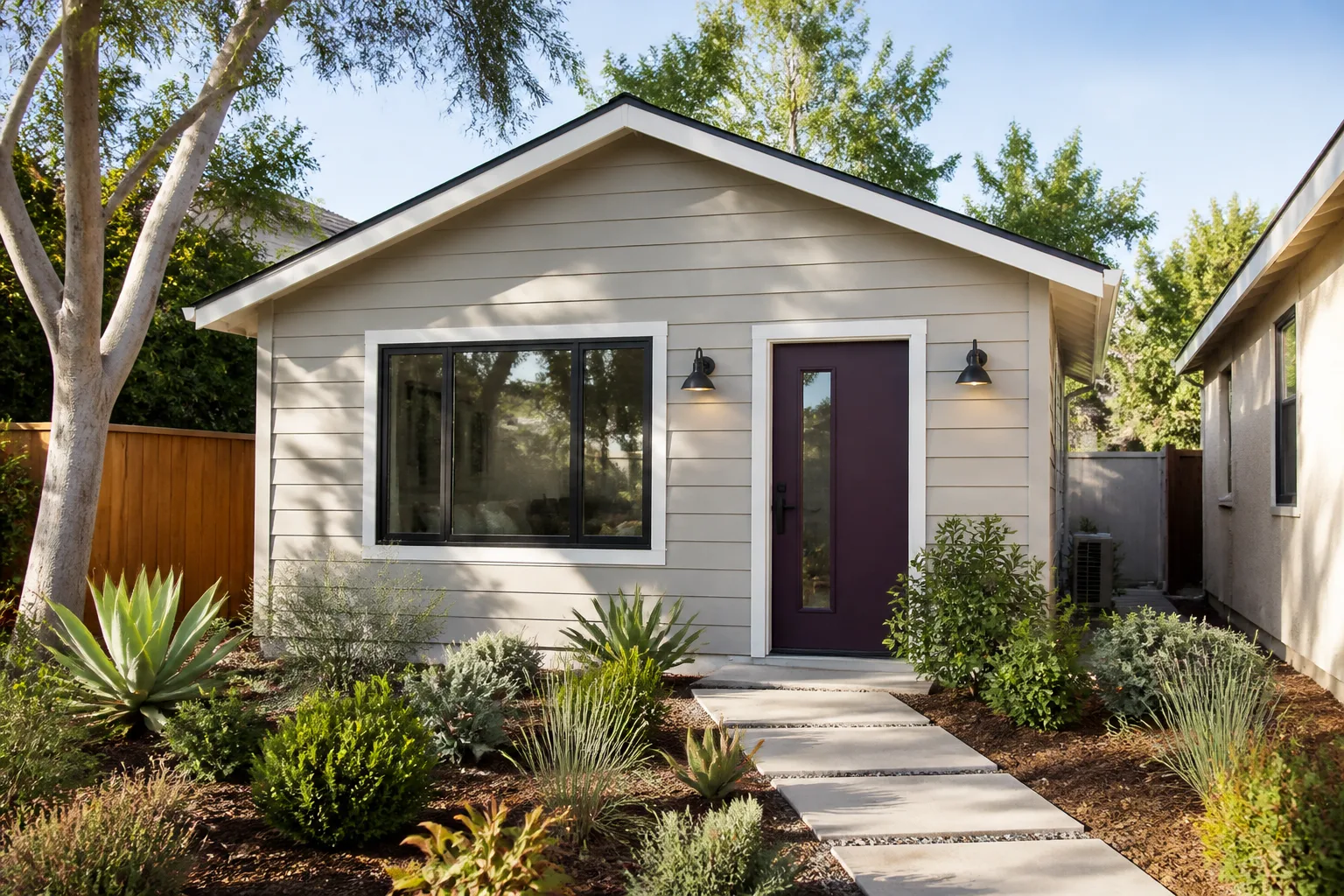
For a typical Sacramento garage conversion, here is what we quote, installed, including labor, fasteners, flashing, caulk, and paint matching:
- Single HardiePlank lap board replacement: $180 to $360, depending on access and how much surrounding paint blending the repair requires.
- Partial siding repair with flashing correction: $800 to $2,200 when water has been getting behind the board and we need to remove, flash, and replace a section rather than a single board.
- HardieTrim board replacement around one window or door: $400 to $1,100, including priming the cut ends and repainting to match.
- Full garage face re-side with HardiePlank or HardiePanel: $4,000 to $9,500 on most single and two-car garage conversions in Sacramento, including removal of the old material, new flashing, and paint.
What changes the price is access. A garage conversion with the old door opening already framed and sided costs less to repair than one where the rear wall is three feet from a fence and the crew has to work from ladders over a steep downslope. What you see on the quote is what you pay. That written price comes before we pull a single board, and it includes the 365-Day Done Right Promise in writing. If the repair fails within a year, we come back and make it right, free.
DIY or Call Us?
If you want to inspect before you call, you can safely do this: check the bottom edge clearance from the soil, look for cracked caulk lines, and knock gently along the wall to feel for soft spots. You cannot safely remove fiber cement siding without the right dust control. Cutting or breaking Hardie releases silica dust, which is exactly the kind of dust you do not want to breathe. We use HEPA-connected tools and proper masks on every cut, and we wrap the work area to keep dust out of the rest of the house. If the repair involves the area around the old garage door header, do not touch it. That beam carries real load, and removing siding around it without understanding the original conversion framing can expose you to structural issues. Call us at (279) 256-1973 and we will talk through what you are seeing. If it sounds simple, we will tell you it sounds simple. Russ Delmar has been looking at Sacramento garage conversions long enough to know when a repair is two boards and when it is a wall that needs to come open.
FAQs
James Hardie fiber cement carries a 30-year limited transferable product warranty, but the real-world life of the siding on a Sacramento garage conversion is usually 20 to 30 years before the paint film fails and the boards need recoating. The boards themselves can last 50 years or more if the installation kept them off grade and the flashing was done right. What shortens the life in Sacramento is not the Hardie. It is water from irrigation overspray hitting the bottom edge, which Sacramento sprinkler systems are prone to do because so many lots run tight side yards.
Small cosmetic chips and hairline cracks can be patched with a fiber-cement-compatible exterior filler and repainted, and that patch can last a few years. Once a crack extends from the face to the back of the board or runs from a fastener, patchwork is a band-aid. The board will continue to move and the crack will telegraph through the paint within a season or two. We are happy to patch when patching makes sense, but we will tell you if replacement is the cheaper option over a three-year horizon. Call (279) 256-1973 and we will give you a straight answer either way.
Most single-board and small-section repairs are done in a single visit, usually four to six hours including setup, cutting, installation, caulking, and paint. If we are re-siding an entire garage face, that is typically two to three days, with the second day used for paint and final trim. Sacramento weather rarely delays Hardie work in the summer, but winter rain can push an exterior job a day or two out.
We do not stock every Hardie color and exposure on the truck, because no crew in Sacramento does. What we keep on hand are the common exposures and widths, plus flashing, housewrap, caulk, and fasteners for most garage conversion repairs. If your exact product is not on the truck, we order it from our Sacramento supplier same day or next morning, and you know the schedule before we start. We work with all the major ADU material and brand systems you will find around Sacramento, including James Hardie, Abodu, Cover, and Dvele.
Written by Russ Delmar, Owner, Lodgewick ADU Sacramento at Lodgewick ADU Sacramento, serving Sacramento and nearby areas.