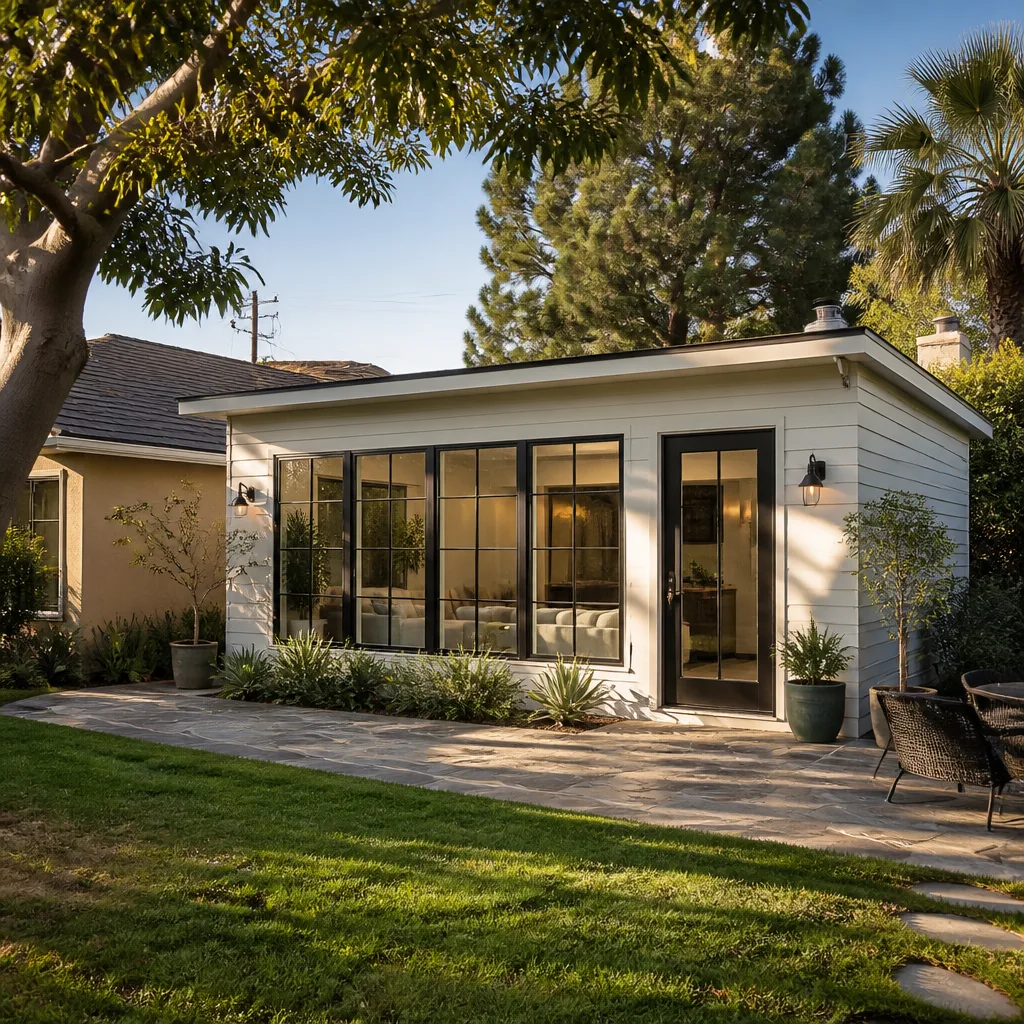
A free site visit, a check of what your lot allows and a written, line-item price.
Get your free estimateHow Much Does ADU Site Prep & Utilities Cost in Sacramento?
ADU site prep and utility connection in Sacramento typically runs between $18,000 and $65,000, with most projects landing in the $28,000 to $42,000 range when you account for excavation, foundation work, sewer and water line extensions, and electrical service upgrades. The single biggest cost driver is whether your existing electrical panel has spare capacity, because a panel upgrade alone can add $3,500 to $6,000 to the job. If you’re building a detached ADU on a flat lot in neighborhoods like Tahoe Park or Land Park, plan on the lower end; if you’re on a sloped lot in Folsom or El Dorado Hills with rock-heavy soil, expect the upper end.
The numbers above aren’t guesses. They reflect what we see on Sacramento County permits and job sites every week. Sacramento’s ADU-friendly zoning rules passed in 2022 have made the paperwork faster, but the underground work doesn’t get cheaper, and that’s where the real money goes. Below we break down exactly what you’re paying for, line by line, so you can compare bids with your eyes open.
Key Takeaways
- Typical all-in cost for site prep and utilities: $28,000 to $42,000 on a standard flat Sacramento lot
- Electrical panel upgrades run $3,500 to $6,000 when your existing panel can’t handle the ADU load
- Sewer line work averages $4,000 to $9,000 depending on depth and distance from the main line
- City of Sacramento building permits for ADU site work typically run $2,500 to $5,500
- Sacramento’s ADU ordinance waives some fees for JADUs under 500 square feet, but site work still applies
ADU Site Prep & Utilities Cost Breakdown (2026)
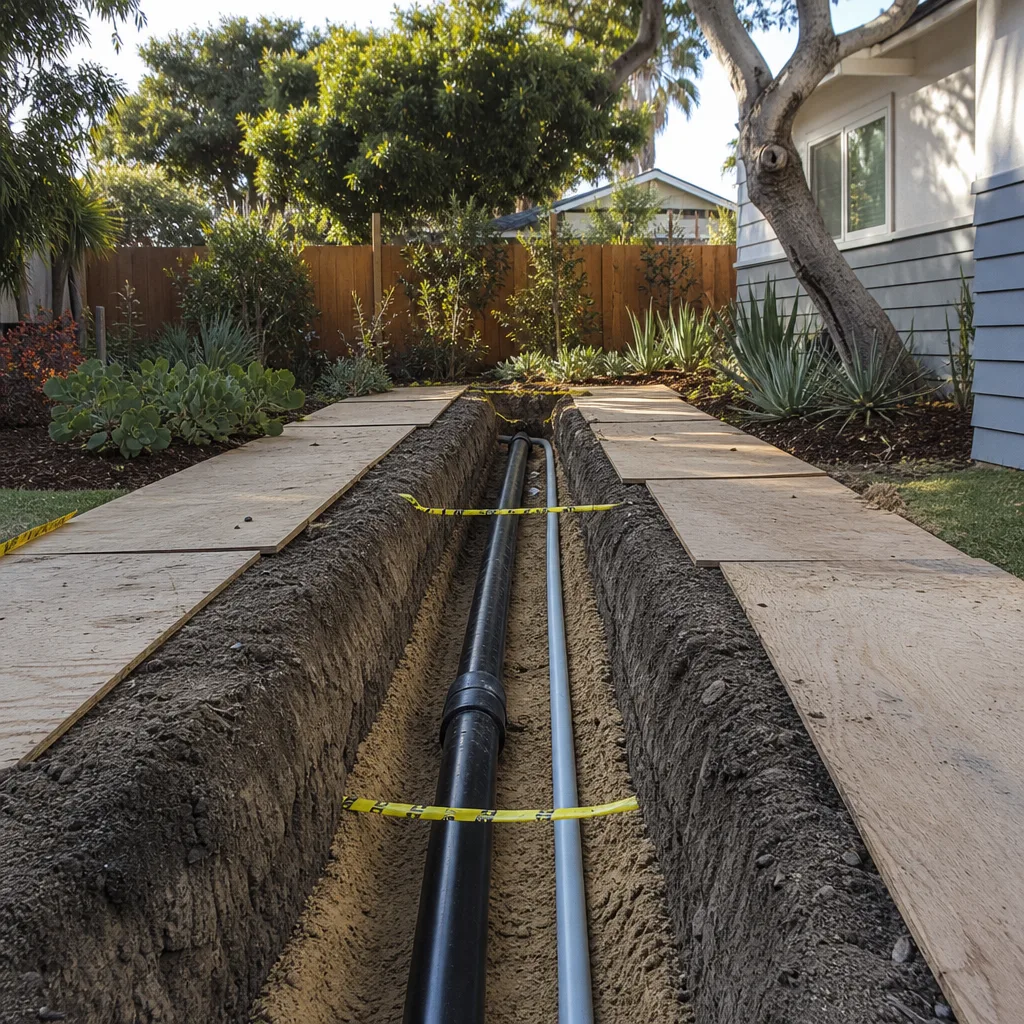
Here’s what a real bid looks like on a standard 600 to 800 square foot detached ADU in Sacramento. These are the numbers we write on proposals for homeowners in Natomas, Oak Park, Curtis Park, and Pocket-Greenhaven, with the caveat that every lot is different and the soil under your grass is the only soil that matters.
| Line Item | What It Covers | Typical Range (Sacramento) |
|---|---|---|
| Site survey & soil testing | Boundary markers, soil compaction test for foundation design | $1,200 – $3,500 |
| Tree removal & grading | Removing mature trees, leveling slopes, rough grading the pad | $2,500 – $12,000+ |
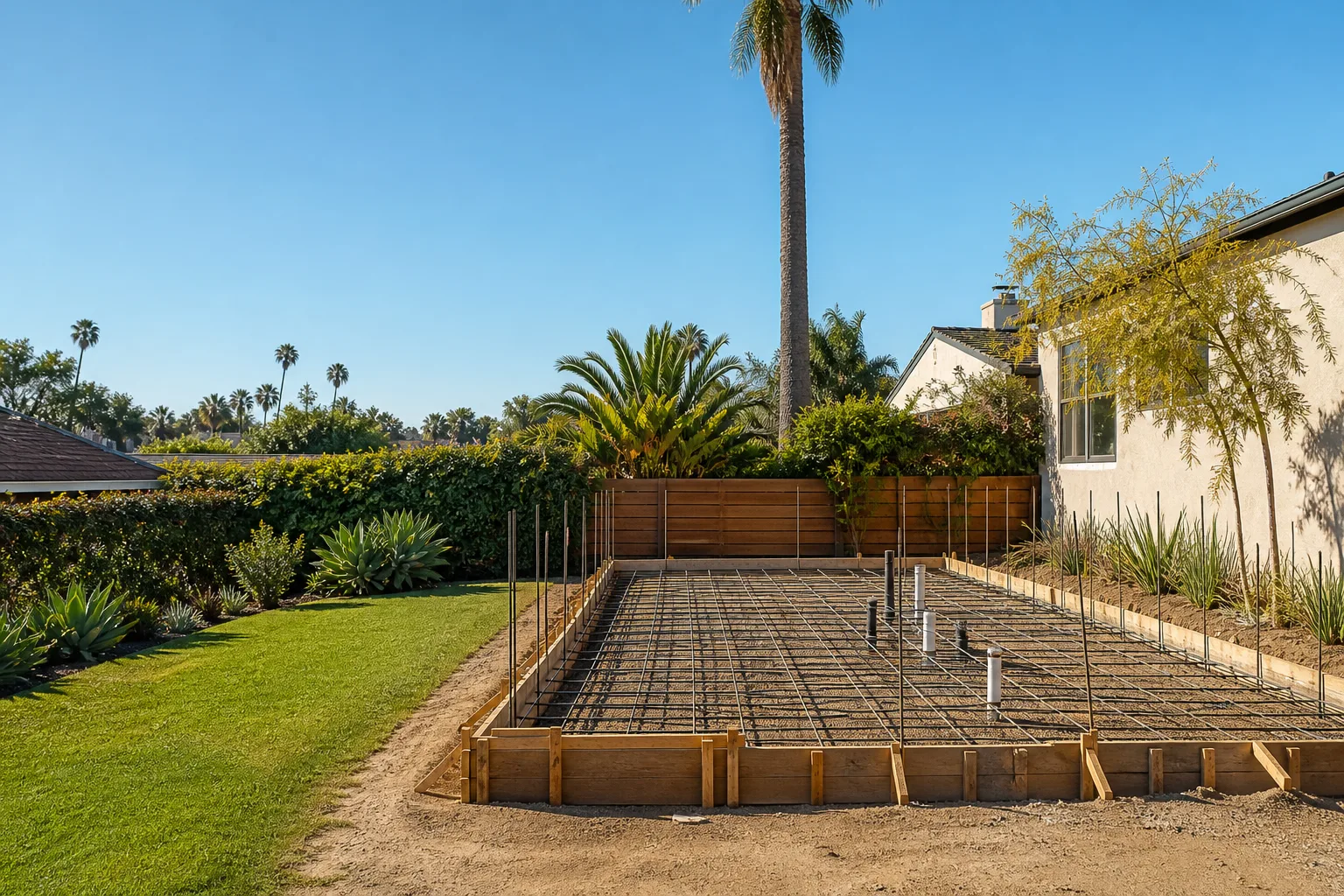
| Excavation & foundation prep | Trenching for footings, digging the foundation area, hauling spoils | $5,000 – $15,000 |
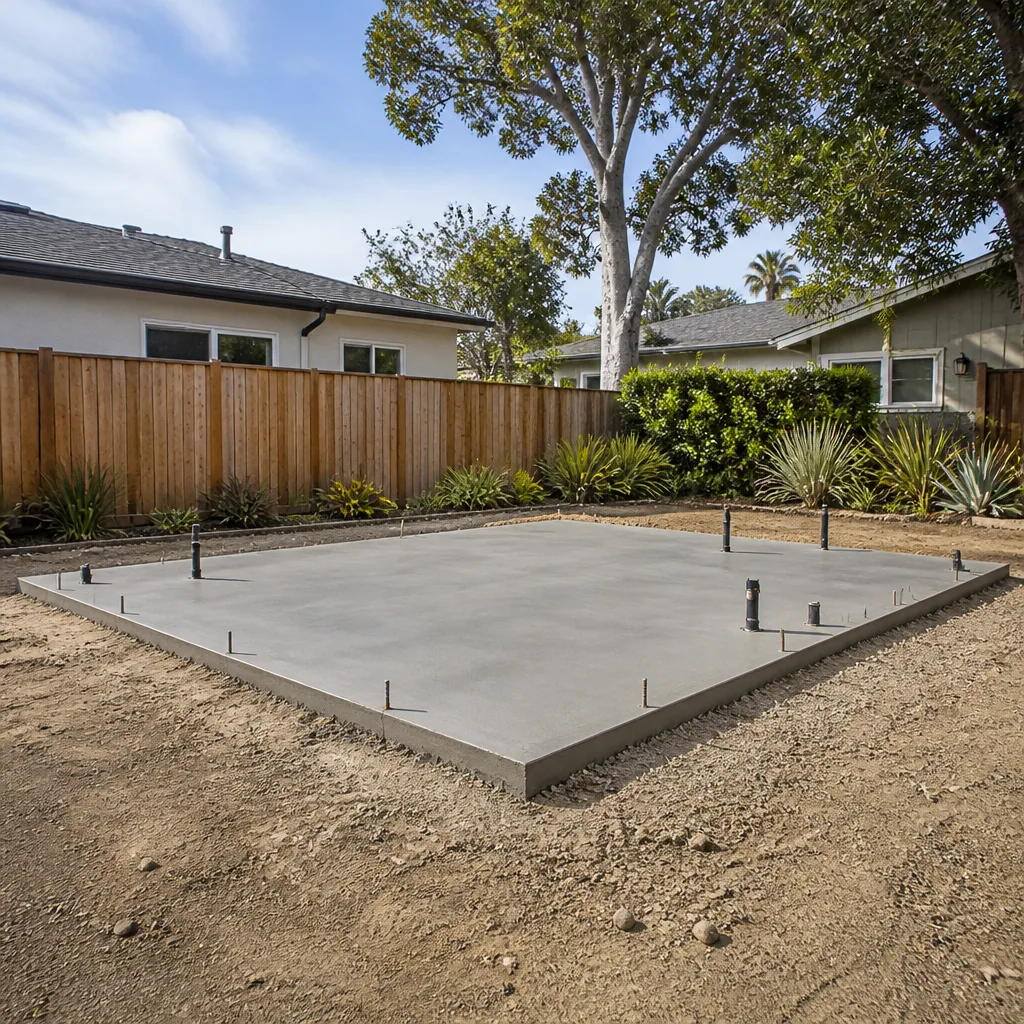
| Foundation (slab or raised) | Concrete, rebar, formwork, and inspection | $9,000 – $18,000 |
| Electrical service & panel | Running power from the main panel, subpanel installation, panel upgrade if needed | $3,500 – $11,000 |
| Plumbing (water line) | Trenching and running a new water line from the main meter | $2,800 – $6,500 |
| Sewer line connection | Tying the ADU drain into the existing sewer line or septic system | $4,000 – $9,000 |
| Stormwater drainage | Grading, French drains, or dry wells to handle Sacramento’s winter rains | $1,800 – $5,000 |
| City of Sacramento permits | Building, electrical, plumbing, and grading permits | $2,500 – $5,500 |
| Utility connection fees | SMUD and City Water Department hookup charges | $1,500 – $4,000 |
What pushes you toward the higher end? A sloped lot in Arden-Arcade or Fair Oaks where you need retaining walls and extra fill. Rock and hardpan under the topsoil, which makes trenching slower and more expensive. A sewer main that runs across the opposite side of the property, so the trench has to cross your whole backyard. A main electrical panel that’s already maxed out and needs a full service upgrade from 100 amps to 200 amps. Any of these can add $5,000 to $15,000 to the job, and none of them are visible until someone starts digging or opens the panel cover.
We’ve also seen Sacramento projects where the City required a tree protection plan because a heritage oak sat within the construction zone, and that plan plus root barricading added $1,800 to the permit package. These are the kinds of things a homeowner shouldn’t have to discover mid-project. A written proposal from a contractor who has done this work in Sacramento neighborhoods before will flag these items before the first shovel hits the ground.
What Affects ADU Site Prep & Utilities Pricing in Sacramento
Sacramento isn’t one market. The soil, the utilities, and the local rules change from one neighborhood to the next, and from one side of the American River to the other. Here are the factors that actually move your price.
- Soil type and drainage. The Sacramento Valley is old floodplain. Much of the city sits on clay that expands when wet and shrinks when dry, and areas near the Sacramento River and American River have sandy layers that don’t compact well. Contractors have to account for this in foundation design, and that means deeper footings or engineered fill in flood-prone zones like parts of Greenhaven and the Pocket.
- Distance from the sewer main. A detached ADU in the back corner of a deep lot in East Sacramento or College Greens might sit 80 to 120 feet from the sewer stub. Every foot of trench costs money, and if the line runs under a driveway or patio, add concrete demolition and replacement.
- Electrical panel capacity. An older home with a 100-amp panel in Tahoe Park or Hollywood Park will likely need a panel upgrade before it can feed an ADU. Newer homes, especially anything built after 2005 in Natomas or Elk Grove, often have 200-amp service already and can take a subpanel without the upgrade.
- Slope and elevation. East Sacramento and Land Park are mostly flat, and flat is cheap. But once you move into the Sierra foothills, toward Folsom, Orangevale, or Granite Bay, lots often pitch 10 to 30 degrees. Retaining walls, stepped footings, and engineered drainage can double the site work budget.
- Tree protection rules. The City of Sacramento has strict protections for oak trees and other large canopy trees. If your build zone includes a protected tree, you’ll need an arborist report and may have to adjust the ADU footprint or install root-barrier fencing. That’s $1,000 to $3,000 in extra compliance cost before you even pour concrete.
- Utility provider and jurisdiction. If your property is in unincorporated Sacramento County, SMUD or PG&E service territories may apply depending on location, and Rural Water District hookups can carry higher connection fees than City of Sacramento water service. A property on a well and septic in Fair Oaks or Orangevale faces a different utility picture altogether, and septic capacity is often the first thing that fails an ADU feasibility check.
- Prefab versus stick-built readiness. If you’re working with a prefab ADU from a manufacturer like Abodu, Cover, or Boxabl, the site prep requirements are more prescriptive. These companies specify exact foundation tolerances and utility stub-out locations, and the precision costs a bit more than a conventional slab. But it saves money later, because the unit arrives on schedule and sets in a day or two.
How to Save on ADU Site Prep & Utilities
The cheapest ADU site under $45,000 looks a lot like this: a flat lot, a back corner with straightforward access for a mini-excavator, a 200-amp panel with spare breaker slots, and a sewer stub within 30 feet of the future ADU foundation. Sacramento has thousands of lots that fit that profile, especially in the post-war neighborhoods of Rosemont, Parkway, and Campus Commons.
If your lot isn’t that simple, here’s where you can still hold costs down without cheating the build.
- Design around the trees and the slope, not through them. Every tree you avoid removing is $1,500 to $5,000 saved on removal, hauling, and root-barrier compliance. Every foot of grade change you avoid with a smarter footprint is money that doesn’t go into retaining walls.
- Keep the ADU close to the house. Some Sacramento homeowners imagine putting a cottage at the far back of the lot for privacy. Fair. But every additional foot of trench is roughly $50 to $90 for sewer and $25 to $50 for water and electric combined. Stretch that 80 feet and you’ve added $6,000 to $11,000 before materials are even counted.
- Ask about a JADU conversion instead. If a detached ADU’s site costs are blowing the budget, converting an attached garage into a JADU (junior accessory dwelling unit) often avoids new sewer and water lines entirely, and the site work shrinks to almost nothing. The tradeoff is a smaller unit, but for a rental or mother-in-law suite, it can pencil out beautifully. The permit path is local; we cover the Sacramento specifics in our guide to ADU Site Prep & Utilities in Sacramento.
- Get a real proposal in writing before you commit. This isn’t a money-saving tip in the sense of cutting a line item, but it’s the biggest money-saving move you can make. A written proposal that names every line item, every allowance, and every assumption means you don’t get surprised by a change order when the trench hits clay. Lodgewick writes the price before work starts, every time, no exceptions. If the proposal says $31,400, that’s the number we build to. We don’t adjust it at the door. Call (279) 256-1973 and we’ll walk your lot and give you a number you can plan a budget around.
What Does the Sacramento Permitting Process Add to the Bill?
The City of Sacramento has been steadily removing barriers to ADU construction since 2020, and in 2026 the permitting process is smoother than it’s ever been. But the permits still cost money and, more importantly, they cost time. A typical site prep and utility permit package for a detached ADU in the city runs $2,500 to $5,500. Sacramento County, which handles unincorporated areas like Arden-Arcade, Carmichael, and Fair Oaks, operates on a similar fee schedule with some variation.
Here’s what that fee covers: building permit, electrical permit for the new service or subpanel, plumbing permit for water and sewer work, and often a grading permit if you’re moving more than 50 cubic yards of soil. Some ADUs in flood zones east of the Sacramento River also need a floodplain development review, which tacks on a $400 to $900 review fee.
Sacramento also allows an ADU to be built with a manufactured home if it meets certain standards, and some homeowners choose that route to control costs. The site prep still happens, and the utility work is identical; what changes is the foundation spec. Companies like Tuff Shed offer accessory building shells that some homeowners convert into conditioned ADUs, but those conversions still require permits and utility connections to be legal dwellings.
One note on timing: the City of Sacramento’s Community Development Department has been running ADU permit reviews in roughly 8 to 14 weeks on average this year, and Sacramento County in about 10 to 16 weeks. That doesn’t change the site prep price much, but it matters when you’re deciding whether to start in the spring before the rainy season hits. Sacramento’s winter rains from November through March make excavation and trenching slower, and slow work means more labor hours. If your timeline has any flexibility, breaking ground between April and October is the cheapest window.
Why Sacramento Soil and Weather Make Site Prep Different Here
Homeowners who grew up in the Northeast or Midwest sometimes assume a slab is a slab. It isn’t. Sacramento sits in a valley that was underwater not so long ago in geological terms, and much of the city is built on expansive clay. This clay expands when the winter rains soak it and contracts in the long, dry Sacramento summers, and that movement will crack a foundation that isn’t engineered for it.
That’s why we use deeper footings and more rebar in Sacramento than you’d see in, say, Phoenix or Las Vegas. It’s also why we pay attention to the compaction test before we pour. If the soil under the slab hasn’t been compacted to 90% density or better as specified by the soils engineer, the slab will settle and cracks will appear within the first three years. By the time you see the cracks, the fix is expensive.
Drainage is another local factor. Sacramento gets an average of 18 to 20 inches of rain annually, and almost all of it falls between November and March. That gives the soil a long, slow soaking, and groundwater can sit near the surface in lower neighborhoods. A site prep plan that ignores drainage leaves you with a damp ADU, mold behind the drywall, and a foundation that never really dries out. We address this with perimeter drains, proper slab elevation, and grading that moves water away from the building, which is standard practice here and should appear as a line item on any competent Sacramento bid.
Sacramento Neighborhood Cost Notes
These aren’t official figures. They’re patterns we’ve observed across hundreds of Sacramento ADU site assessments, and they’ll help you understand why your neighbor’s project cost what it did.
Flat, predictable, lower range ($22k to $32k): Tahoe Park, Colonial Heights, North Oak Park, Hollywood Park, and much of South Natomas. These neighborhoods have flat lots, mostly modern utility lines, and few protected trees that interfere with a back-lot ADU. If your home was built between 1950 and 1980 with a panel that’s been upgraded since, you may be in the lowest cost tier in Sacramento.
Mid range with surprises ($30k to $45k): Curtis Park, Land Park, East Sacramento, and midtown/downtown lots. Lots in these areas are often tighter, with older utilities and more tree canopy. The charm of a 1920s Land Park bungalow comes with clay sewer lines that may need partial replacement, and Sacramento’s older neighborhoods have combined sewer and storm lines in some sections, which changes how and where you can connect.
Higher range with terrain ($38k to $65k+): Folsom, Granite Bay, Orangevale, and El Dorado Hills. Sloped lots, rock, longer utility runs, and county-level permits push these projects into the higher end. A Folsom hillside lot with a 20% grade and a rock shelf under the topsoil can easily pass $60,000 in site prep alone before the ADU structure is even considered.
How Prefab ADU Site Requirements Affect the Budget
If you’re planning to use a prefab ADU manufacturer – Abodu, Cover, Dvele, Mighty Buildings, Boxabl, or Plant Prefab – the site prep equation changes in two ways. First, the foundation tolerances are tighter. A prefab module is built in a factory to within an eighth of an inch, and the foundation has to meet that standard. That means laser-leveled pads and sometimes a different formwork approach, which adds $1,500 to $4,000 to the slab cost compared to a stick-built foundation. Second, the utility stubs have to be within a few inches of the manufacturer’s specification, which requires careful coordination between the site contractor, the utility subcontractor, and the factory. That coordination is the hidden value of working with a builder who has already handled these brands and knows their specs.
We work with all of these manufacturers regularly, and we know their site plans better than most general contractors in the Sacramento area. If you’re weighing a Boxabl against an Abodu, we can walk you through the site requirements side by side, so the site prep estimate reflects the unit you actually want. We also work with James Hardie siding and trim products on conventional builds, because Sacramento’s heat and UV exposure demand materials that hold paint and resist warping, which is a conversation worth having early since the siding choice affects how we frame the exterior.
The Kingswell family has deep roots in home services here, and Lodgewick ADU Builders has been building accessory dwelling units, garage conversions, and home additions since 2010. The name says what it means: a lodge is a small house on a larger property, and an ADU is exactly that. Our job, as Russ Delmar puts it, is to make sure the small house stands square and the utilities never give the homeowner a reason to call us back. But if something does go wrong, the 365-Day Done Right Promise is in writing, and a free return visit is part of it.
FAQs – ADU Site Prep & Utilities Cost
How much does it cost to run utilities to an ADU in Sacramento?
Running water, sewer, and electrical utilities to a detached ADU in Sacramento typically costs between $8,000 and $26,000 total, depending on trench distance, panel capacity, and utility provider fees. A home with a 200-amp panel, a sewer stub within 30 feet, and flat soil will sit at the low end; a pre-1970 home with a maxed-out panel and an 80-foot sewer run will sit at the high end. Call (279) 256-1973 for a written line-item estimate specific to your lot.
Can I connect my ADU to my existing sewer line?
Yes, and most Sacramento homeowners do exactly that. The cost to tie an ADU drain into the main house sewer line runs $4,000 to $9,000, but if the existing line is old clay pipe or already root-damaged, your permit may require partial replacement, pushing the total to $10,000 to $15,000. The cheaper and often better alternative in tight lots is a JADU conversion, which uses the existing plumbing with little or no trenching.
Is it cheaper to repair my existing panel or upgrade to 200 amps for an ADU?
In Sacramento, if your panel is 100 amps or smaller, upgrading to 200 amps is almost always the right call, and it costs $3,500 to $6,000 including labor, permit, and materials. Adding a subpanel to an already adequate 200-amp system may run as little as $1,200 to $2,500. A certified electrician should make this call on site, and it should be written into your proposal before any trenching begins.
Do I need a grading permit for ADU site prep in Sacramento?
If your project moves more than 50 cubic yards of earth, you’ll likely need a grading permit, which adds $400 to $1,200 in fees and a week or two of review time. On a flat lot with a standard slab foundation, many Sacramento ADU projects stay under the 50-yard threshold and avoid the grading permit entirely. Your site contractor should tell you up front which category your lot falls into.
How long does ADU site prep take in Sacramento, and does timing affect cost?
Site prep and utility work for a standard detached ADU in Sacramento takes 4 to 10 weeks from first dig to utility connections, with most projects closing out around 6 weeks. Starting between November and March can add 15% to 25% to labor costs because Sacramento’s winter rains slow excavation and require more rework on trenching. If you can break ground between April and October, you’ll save real money.
Should I hire a general contractor or try to manage site prep myself?
If you’re an experienced general contractor with local trade relationships, managing site prep as an owner-builder is possible and might save 10% to 15% on markup. For everyone else, a general contractor who coordinates the excavator, the electrician, the plumber, and the concrete sub is worth the margin, because utility work is dangerous and mistakes here are buried underground where they can’t be inspected later. Electrical service work involves live wires and a main panel; sewer lines on older Sacramento properties can contain degraded pipe; and excavation around existing utility lines is not a DIY project. We recommend every homeowner work with a licensed contractor for this phase.
Pricing reflects the Sacramento market as of 2026. Lodgewick ADU Sacramento offers free estimates – call (279) 256-1973.
Written by Russ Delmar, Owner at Lodgewick ADU Sacramento, serving Sacramento since 2010.
What Our Customers Say
"The ADU came out beautiful and the permitting, which terrified me, was handled start to finish. They kept me updated every week so I was never wondering what was happening."
- Shauna Mills"Garage conversion into a studio for our teenager. Honest about what was realistic and what wasn't, finished close to schedule, and cleaned up the site daily."
- Marcus Beaumont"Converted our garage into a rental studio. The crew was respectful of the neighbors and kept the site clean. It's bringing in rent now and paid for itself faster than I expected."
- Grace Yoon