Last updated October 15, 2026
How to Hire a ADU Contractor in Sacramento: A Step-by-Step Guide
Sacramento’s ADU boom has created a predictable side effect: contractors who built fences and decks last year are now calling themselves ADU specialists. The California Contractors State License Board logged a 34% spike in ADU-related complaints between 2021 and 2023. That number tells a story we hear constantly from Sacramento homeowners: a price that changed mid-project, a permit that never got pulled, a build that stalled at rough framing and never restarted. This guide gives you a repeatable vetting process so you can hire an ADU contractor in Sacramento with confidence, and you can explore more guides & resources on our blog. You’ll learn the exact documents to demand, the questions that expose inexperience fast, and how to structure payments so your money only moves when verified work does.
Quick Answer
To hire an ADU contractor in Sacramento, verify their CSLB license and ADU-specific experience, demand a written scope of work before comparing any bids, and refuse any contract without a permit-pull timeline and a payment schedule tied to inspection milestones. A legitimate contractor will hand you proof of workers’ comp and general liability with your address listed, plus a named project manager, before you sign anything. Call (279) 256-1973 and Lodgewick ADU Sacramento will walk you through the process with a written price before any work starts.
Table of Contents
- How to Verify a CSLB License in 90 Seconds (And Why “B” Isn’t Enough)
- The Three-Bid Trap: Why Three Bids Mean Nothing Without a Scope Document
- Contract Red Flags That Cost Sacramento Homeowners Thousands
- The 5 Documents a Legitimate ADU Contractor Hands You Before You Sign
- How to Structure a Payment Schedule Tied to Permit Milestones
- Sacramento ADU Permits: What Actually Happens and How Long It Takes
- Prefab vs. Stick-Built ADUs in Sacramento: Which Fits Your Lot
- Common Mistakes to Avoid
- When to Call a Professional
- Frequently Asked Questions
How to Verify a CSLB License in 90 Seconds (And Why “B” Isn’t Enough)
Every ADU contractor in Sacramento must hold an active license from the California Contractors State License Board. Checking takes about 90 seconds. Go to the CSLB website, click “Check a License,” and enter the contractor’s name or license number. Look for three things: the license status says “Active,” the classification includes “B – General Building,” and there are no unresolved complaints or disciplinary actions listed.
Here’s what most homeowners miss: a B license means the contractor passed a general construction exam. It does not mean they’ve ever pulled an ADU permit in Sacramento. ADU construction has specific requirements: detached units need their own foundation engineering, attached conversions trigger fire-rating requirements on shared walls, and every project needs a site plan that accounts for Sacramento’s specific setback rules and lot coverage limits. A contractor who frames houses in Roseville may have never navigated the City of Sacramento’s ADU pre-approval process, studied ADU Permits, Codes & Inspections in CA: What You Need to Know, or dealt with SMUD’s electrical service requirements for a second meter.
Ask directly: “How many ADU permits have you personally pulled in the City of Sacramento in the last three years?” Demand a number. If they hesitate or say “many” without specifics, that’s your answer. Russ Delmar and the team at Lodgewick ADU Sacramento home can show you a portfolio of Sacramento ADU permits pulled, each with the permit number visible. That’s the standard you should hold every bidder to.
The Three-Bid Trap: Why Three Bids Mean Nothing Without a Scope Document
The conventional advice for hiring any contractor is “get three bids.” Here’s the problem: three bids only help if all three contractors are pricing the same thing. In Sacramento’s ADU market, we regularly see bids that vary by $80,000 or more for what looks like the same project. The difference is never labor rates. It’s scope.
One bid includes a 200-amp electrical panel upgrade and trenching for a new service line. Another assumes you’ll reuse the existing 100-amp panel and run the ADU off a subpanel. One bid includes pre-construction termite inspection and soil testing. Another doesn’t. One bid prices James Hardie siding; another prices stucco. You’re not comparing contractors at that point. You’re comparing different buildings.
The fix is a one-page scope document you write before anyone bids. It doesn’t need to be technical, but it does need to be specific. Here’s what to include:
- Unit type and size: “Detached new construction ADU, 749 square feet, one bedroom, one bath, with a walk-in closet.” Not “an ADU.”
- Foundation: “Slab-on-grade, so test required.” Override any contradiction in a proposal.
- Electrical: “Contractor shall install a 200-amp service upgrade and separate meter for the ADU. This is non-negotiable.”
- HVAC: “Ductless mini-split system, one head in the bedroom, one in the living area.” Prevents a bidder from pricing baseboard heaters and calling it a day.
- Exterior finish: “James Hardie plank siding, pre-finished, color to be selected by owner from standard palette.”
- Site work: “Remove 30 linear feet of existing fence at the rear property line; install new 6-foot redwood fence.” If you don’t specify it, it’s not in the bid, and it’ll show up as a change order later.
- Permits: “Contractor responsible for all City of Sacramento building permits, fees, and inspections.” This line alone can be worth $12,000-$20,000 depending on the project.
Hand the same scope document to every bidder. Now the bids are comparable. One of the easiest ways to test a contractor is how they respond to that document. A legitimate ADU Builder in Sacramento will thank you for it and price it line by line. A contractor who says “just trust us on the details” is telling you they don’t want accountability.
Contract Red Flags That Cost Sacramento Homeowners Thousands
Most ADU contract disputes in the Sacramento area share the same few root causes. The contractor used vague language, the payment schedule front-loaded the risk, and the homeowner signed without understanding who was responsible for permits. You can spot these problems before you sign if you know what to look for.
The lump-sum payment schedule. A contract that says “50% due at signing, 50% due at completion” sounds simple, but it puts the homeowner in a terrible negotiating position when the project hits month seven and the contractor starts talking about change orders. A proper ADU payment schedule has multiple draws tied to specific, verifiable milestones: foundation poured and passed inspection, framing complete and passed inspection, rough mechanicals complete and passed inspection, drywall hung, and final inspection passed. We’ll cover this in detail below.
Missing permit responsibility language. If the contract doesn’t explicitly state that the contractor is responsible for pulling all permits, scheduling all inspections, and correcting any work that fails inspection, then guess who the City of Sacramento holds responsible? You. Permits attach to the property and the property owner, not to the contractor. If a contractor walks off an unpermitted ADU, you own that problem.
No written completion date. “Time is of the essence” is legal language that actually matters. A contract without a completion date or a reasonable timeline is an open-ended commitment. You want language like: “Substantial completion shall occur no later than 180 days from permit issuance, subject to owner-caused delays and weather delays exceeding 10 consecutive days.”
Materials allowance language. If your contract says “allowance: $8,000 for flooring” without a specified material and grade, you’ve just agreed to pay the difference between that allowance and whatever the contractor picks. Specify the product or at least the grade. “LVP, 12mm, Mannington or equivalent” is specific enough to hold up if there’s a dispute.
No change-order procedure. Change orders happen on nearly every ADU project. The question is whether they’re fair. Your contract should state: “All changes must be in writing and signed by both parties before work proceeds.” A contractor who wants a verbal OK for a $4,000 change is not doing you a favor.
The 5 Documents a Legitimate ADU Contractor Hands You Before You Sign
Before you put ink on any ADU contract in Sacramento, the contractor should be able to hand you five things. Not promise to email them next week. Hand them to you. If any of these five documents is missing, do not sign.
- A written price, not an estimate. An estimate is a guess with a disclaimer. A written price is a commitment. It should be itemized: labor, materials, permits, site work, and a contingency line that’s capped (typically 5-10% for unforeseen conditions, and only usable with your written approval). The written price is part of The Kingswell Guarantee that we put on every project: a price before work begins, in writing, no exceptions.
- A permit-pull timeline. “We’ll submit plans to the City of Sacramento within 14 days of contract signing. We anticipate plan check comments within 4-6 weeks. We’ll respond to comments within 7 days. Permit issuance expected within 60-75 days of submission.” That’s a timeline. “We’ll get permits when we get them” is not a timeline.
- Proof of workers’ comp and general liability with your address listed. Ask for a certificate of insurance naming you and your property address as additionally insured. If a contractor can’t or won’t list your address, you don’t have coverage for a worker injury on your property. That’s not a technicality. It’s a financial catastrophe waiting to happen.
- A named project manager. You want a name and a direct phone number for the person who is on your job site daily or near-daily. Not the salesperson. Not the owner’s assistant. The person who will hear “why is the inspector here two days late?” and actually resolve it. Our background-checked, uniformed technicians report to a named project manager, and you’ll have that name before we start.
- A written guarantee. What happens if the work fails after completion? A drywall seam cracks. A door binds in August. A mini-split stops blowing cold on the first 100-degree day. Every Lodgewick ADU Sacramento project carries the 365-Day Done Right Promise in writing: if it’s not done right, we make it right, with a free return visit if the work fails within the guarantee period. That’s not a marketing line. It’s in the contract.
How to Structure a Payment Schedule Tied to Permit Milestones
A smart ADU payment schedule has one rule: your money moves only when verified work moves. “Verified” means a Sacramento city inspector signed off on it, not that the contractor says the crew “got a lot done this week.” Tying payments to inspection milestones protects you from the most common ADU nightmare: a contractor who collects 70% of the contract value, then goes quiet for six months because they’re juggling four other jobs.
Here’s a payment schedule structure we use and recommend homeowners demand, adjusted to your project’s specifics:
- 10% at contract signing. This covers mobilization, plan finalization, and permit submission. A contractor asking for 50% up front before any permit application is filed is financing their overhead with your money.
- 15% when the permit is issued. Now the project is real. The City of Sacramento has approved the plans. This draw is a milestone, not a calendar date.
- 20% when the foundation passes inspection. You don’t pay this when the concrete is poured. You pay it when the Sacramento building inspector signs off on the foundation. If the foundation fails, they fix it, and you pay when it passes.
- 20% when framing passes inspection. The walls are up, the roof is on, and the inspector has verified structural integrity. This is the halfway point of construction, and you’ve paid 65%. That’s appropriate because the contractor has completed about 65% of the physical work.
- 20% when rough mechanicals pass inspection. Rough electrical, rough plumbing, and rough HVAC are all verified. The walls get insulated and closed up after this point.
- 10% when drywall and finishes are complete. The unit looks finished. You can walk through it. Cabinet faces are on, flooring is down, paint is done.
- 5% at final inspection and certificate of occupancy. The City of Sacramento signs off. You receive a certificate of occupancy. The ADU is legally rentable. This is your biggest leverage point.
Notice what’s not in there: payments tied to “week 3” or “60 days from contract.” Calendar-date payments put you at risk of paying for work that hasn’t happened. Inspection-milestone payments put your contractor at risk of not getting paid promptly, which is exactly where you want the risk to be if they’re not performing.
Sacramento ADU Permits: What Actually Happens and How Long It Takes
Sacramento has made a genuine effort to streamline ADU permitting. The city offers pre-approved ADU plans, a dedicated ADU counter, and published timelines for plan check. But “streamlined” in Sacramento still means paperwork, waiting, and a process with specific local requirements that out-of-town contractors routinely underestimate.
The City of Sacramento building permit process for a standard detached ADU typically runs 60 to 120 days from submission to permit issuance, depending on plan check complexity, response times, and whether you’re attaching to existing utilities or trenching new ones. A contractor who has pulled multiple ADU permits in Sacramento knows which plan checkers are strict about which details. They know that Sacramento requires tree protection plans if the ADU footprint is near a protected tree. They know SMUD has specific requirements for a second meter that are different from PG&E’s rules in the Bay Area. They know the Sacramento Municipal Code requires a minimum side-yard setback of 4 feet for most detached ADUs, not the 5 feet some cities require.
Ask your contractor: “When was the last time you sat in the ADU counter at the City of Sacramento building permit office?” If the answer is “we do everything online” and they can’t describe a specific conversation with a plan checker, they’re doing your permit in the same queue as every other project, and their mistakes will come back to you as plan check comments, resubmission fees, and weeks of delay.
For homeowners considering a garage conversion, the permitting questions are different but just as specific. A Garage Conversion Contractor in Sacramento needs to know whether your existing slab meets current code for insulation, whether the garage’s roof structure supports a conversion without a full re-frame, and whether your property can legally lose the covered parking space under Sacramento’s ADU parking exemptions. These are not theoretical questions. They’re the difference between a permit that takes eight weeks and one that takes eight months.
Prefab vs. Stick-Built ADUs in Sacramento: Which Fits Your Lot
Sacramento’s ADU market has split into two paths: traditional stick-built construction and prefabricated units from companies like Boxabl and Plant Prefab. Both can work here. Both have Sacramento-specific tradeoffs that most guides don’t mention.
Stick-built ADUs are flexible. If your lot in Oak Park or East Sacramento has an odd shape, a tight setback, or a mature tree that limits crane access, a stick-built unit can be designed around those constraints. You’ll get exactly the floor plan you want, but expect a longer timeline and a higher price when upgraded finishes are involved. Stick-built ADUs in Sacramento typically run $250 to $400 per square foot for a turnkey unit, depending on the level of finish and site conditions; see our ADU Cost Breakdown: The Sacramento Homeowner’s Reference for 2026 for a fuller picture.
Prefab units from Boxabl, Plant Prefab, and similar manufacturers arrive in modules that get craned onto your prepared foundation. The advantages are speed and controlled factory quality. The Sacramento-specific challenge is that “prepared foundation” is doing a lot of work in that sentence. Prefab still requires site work: grading, foundation pouring, utility trenching, and often a concrete or asphalt path for the crane. If the crane can’t reach your backyard, the prefab option gets expensive fast. Also, Sacramento’s plan check process for modular units is not automatically faster. The city still reviews the site plan, foundation, and utility connections.
The right answer depends on your lot. A flat, accessible backyard in Natomas is a strong prefab candidate. A narrow urban lot in midtown with alley access and a 100-year-old oak tree next to the building pad is probably stick-built territory. A competent contractor should walk your lot, ask about your constraints, and tell you which path makes sense rather than selling you whichever option they happen to offer. Our team works with leading ADU brands and materials including Boxabl and Plant Prefab, but we’ve also told homeowners that a prefab unit is the wrong call for their specific lot. The right answer is the one that works for your property, not the one that’s easiest to sell.
Common Mistakes to Avoid
- Hiring a contractor without seeing a Sacramento ADU permit with their name on it. Ask for the permit number and verify it with the city. Past performance in ADU permitting is the strongest predictor of a smooth build.
- Signing a contract with a vague scope of work. “Build 749 square foot ADU” is not a scope. A scope lists foundation type, electrical service, HVAC, finishes, and site work. Vague contracts generate change orders.
- Paying a large deposit before permit issuance. More than 10% down before permits are issued is a risk you don’t need to take. There are other contractors who will structure it differently.
- Assuming the contractor handles everything. You may need to coordinate with SMUD, your HOA if you have one, and your property insurer. A good contractor tells you what’s yours versus theirs. A bad one discovers it midway through and sends you a change order.
- Choosing based on price. The lowest bid on a Sacramento ADU is often the contractor with the least experience in ADU-specific permitting. They’ll learn on your project, and you’ll pay for that education in change orders and delays.
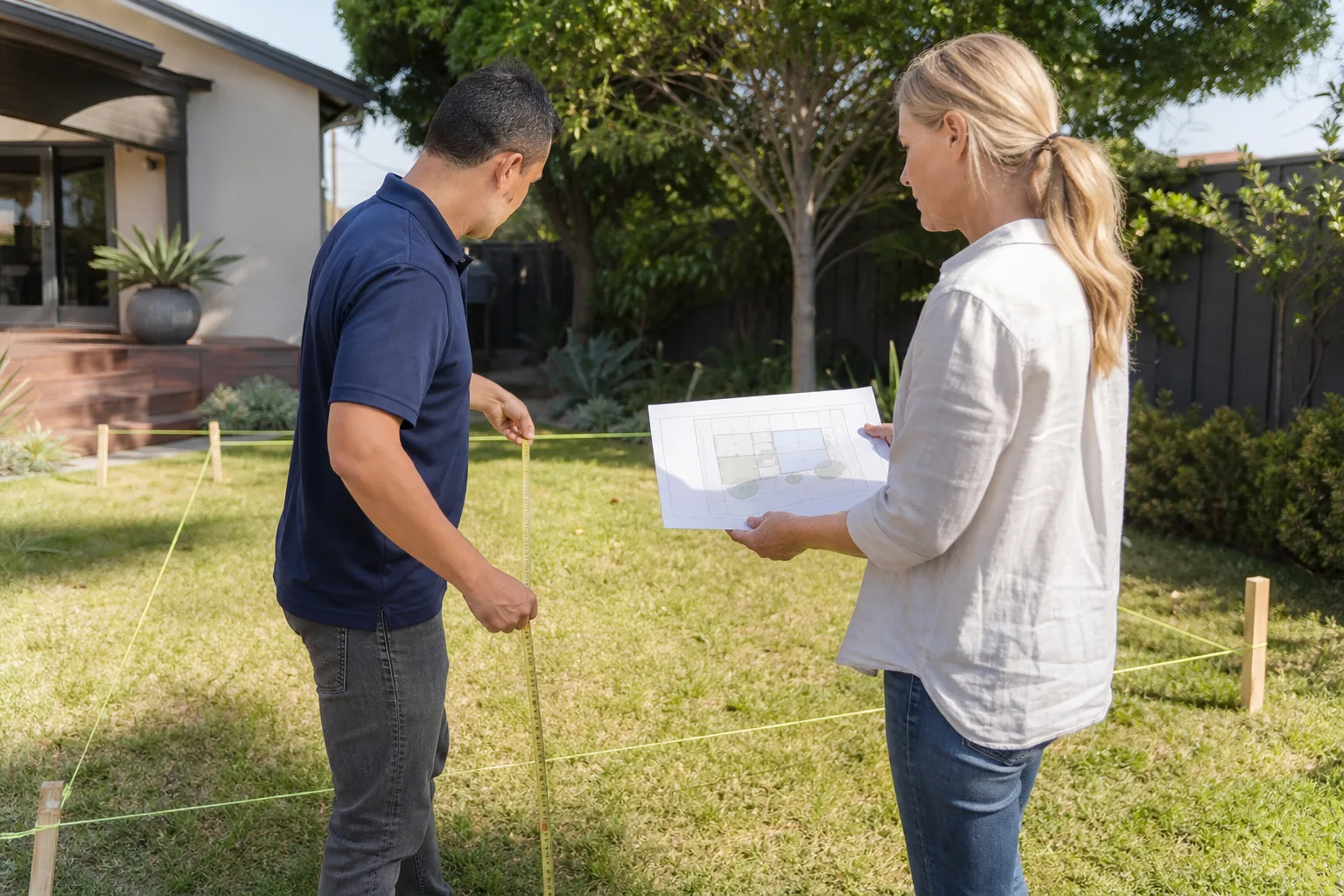
- Skipping the site visit. A contractor who quotes before walking your lot is guessing. Setbacks, access, tree protection, and utility locations all affect price. No walkthrough, no quote.
When to Call a Professional
You should call an ADU contractor in Sacramento before you’ve made any decisions about design, financing, or prefab versus stick-built. The right contractor will shape those decisions with information specific to your lot. You should also call immediately if you’ve received a bid that seems dramatically out of line with others, if a contractor is pressuring you to sign without a permit-pull timeline, or if you’ve inherited an unpermitted structure that needs to be brought to code. Lodgewick ADU Sacramento offers free estimates in Sacramento. Call (279) 256-1973 and we’ll walk your lot, write a real scope, and put a price in writing before you commit to anything.
Frequently Asked Questions
A turnkey ADU in Sacramento typically costs between $180,000 and $450,000 depending on size, site conditions, and finishes, with most detached units landing in the $250,000 to $350,000 range. This includes permits, site work, construction, and basic finishes. Units with upgraded kitchens, custom cabinetry, or difficult site access run higher. Call (279) 256-1973 for a written price specific to your lot.
From the day you sign a contract, expect 8 to 14 months for a stick-built ADU in Sacramento: 2 to 4 months for design and permitting, and 6 to 10 months for construction. Prefab units can compress construction to 3 to 5 months, but site work and permitting timelines remain similar. Get a written permit-pull timeline from any contractor before signing.
Yes, every ADU in Sacramento requires a building permit from the City of Sacramento, and permit documents must be submitted by a licensed contractor or a California-licensed architect or engineer. Unpermitted ADUs cannot legally be rented, sold as living space, or covered by homeowners insurance claims for structural issues. A Home Addition Contractor in Sacramento should handle the permit process as part of the project scope.
You can, but the savings usually evaporate in plan check delays, failed inspections, and change orders. ADU construction in Sacramento has permit requirements that a general contractor without ADU-specific experience simply doesn’t know. Ask for a list of ADU permits they’ve personally pulled in the City of Sacramento. If they can’t produce one, walk away.
The 365-Day Done Right Promise is a written guarantee included on every Lodgewick ADU Sacramento project: if the work isn’t right within 365 days of completion, we come back and make it right at no charge. It applies to both our ADU builds and our repair work. That’s the standard you should expect from any contractor you hire.
Under a properly written contract, the price only changes if you approve a written change order. That’s why you want a written price, not an estimate, and a contract that requires your signature on any change before work proceeds. A 5-10% contingency for unforeseen site conditions is standard and legitimate, but it should require your written approval to use. Call (279) 256-1973 and we’ll show you what an honest change-order clause looks like.
The Bottom Line
Hiring an ADU contractor in Sacramento is not about comparing three prices and picking the middle one. It’s about verifying ADU-specific experience, forcing every bidder to price the same written scope, refusing any contract without a permit-pull timeline and milestone-based payments, and demanding proof that the contractor carries insurance with your address named. The Kingswell Guarantee exists because this process should not depend on trust alone. Written price first. Defined arrival window. Clean job site. Written guarantee. Free return visit if it fails within 365 days. That’s what you should accept from any contractor you hire, and it’s what we put in writing on every project.
Call Lodgewick ADU Sacramento at (279) 256-1973 for a free estimate. Russ Delmar and our team will answer the phone, walk your lot, and hand you a written price before you commit to anything.
Written by Russ Delmar, Owner at Lodgewick ADU Sacramento, serving Sacramento since 2010.