Last updated October 15, 2026
The Complete Guide to ADU in Sacramento
Sacramento approved over 1,900 ADU permits in 2023, and that number keeps climbing. But here’s what nobody tells you at the start: city inspectors report that nearly one in three projects stalls mid-build because the homeowner didn’t know their sewer lateral had to be upsized before framing started. That single oversight can add $8,000 to $15,000 and six to eight weeks to a project that was supposed to be straightforward. This guide walks you through the real path from lot check to move-in day in Sacramento, so you know exactly what you’re agreeing to at each step before you sign anything. For how to hire an ADU contractor in Sacramento, see our step-by-step companion guide.
Quick Answer
Building an ADU in Sacramento typically costs between $180,000 and $450,000 depending on whether you convert a garage, build a detached backyard unit, or add an attached addition. The process takes roughly 9 to 14 months from design to occupancy. Most Sacramento homeowners on standard residential lots can build an ADU up to 1,000 square feet under state law, but your specific lot’s setbacks, sewer capacity, and electrical panel capacity determine what’s actually feasible on your property.
Table of Contents
- Sacramento ADU Rules: What Your Lot Actually Allows
- How to Run a Sacramento Parcel Lookup Yourself in Under 10 Minutes
- The Three ADU Types in Sacramento: Costs, Sizes, and Timelines
- The Sacramento Permit Process: Week-by-Week Reality
- The Two Budget Surprises That Blindside Sacramento ADU Owners
- What ‘Permitted and Inspected’ Actually Protects You On
- Financing an ADU in Sacramento: Real Numbers
- Common Mistakes to Avoid
- When to Call a Professional
- Frequently Asked Questions
Sacramento ADU Rules: What Your Lot Actually Allows
Sacramento follows California state ADU law, which is among the most permissive in the country, but the city layers its own zoning requirements on top. The most important numbers for Sacramento homeowners: a detached ADU can be up to 1,000 square feet (or 1,200 square feet if it has more than one bedroom), an attached ADU can be up to 50% of the primary home’s size (max 1,200 square feet), and a garage conversion is limited to the existing garage footprint. Height limits for detached units are 16 feet typically, or 18 feet if the unit is within half a mile of transit or on a lot with an alley.
Sacramento also enforces a 4-foot rear setback and 4-foot side setbacks for detached ADUs under 16 feet tall, which is far more forgiving than the 20-foot rear setback required for standard accessory structures. Lot coverage matters too: in many Sacramento neighborhoods, including Natomas, Land Park, and East Sacramento, combined lot coverage for the main house, ADU, and other structures cannot exceed 40% to 50% of your total lot size. In our experience, the lots that run into trouble are mid-century ranchers where the original house already consumes most of the allowable coverage.
JADUs (Junior Accessory Dwelling Units) are simpler: Sacramento allows one JADU up to 500 square feet inside the existing home, typically a converted bedroom or basement with its own entrance and small kitchenette. These run $50,000 to $120,000 and require significantly less permitting. But they also add less rental value than a fully independent unit.
One Sacramento-specific rule that surprises people: the city requires owner-occupancy on the property if you want to rent out both the main house and the ADU under the state’s streamlined approval. This restriction applies to ADUs permitted after 2020. If you plan to move out and rent both units, that changes the calculus significantly and may affect your financing.
For the full picture of what’s possible on your specific lot, our ADU Builders in Sacramento page walks through the common scenarios we see in neighborhoods across the city.
How to Run a Sacramento Parcel Lookup Yourself in Under 10 Minutes
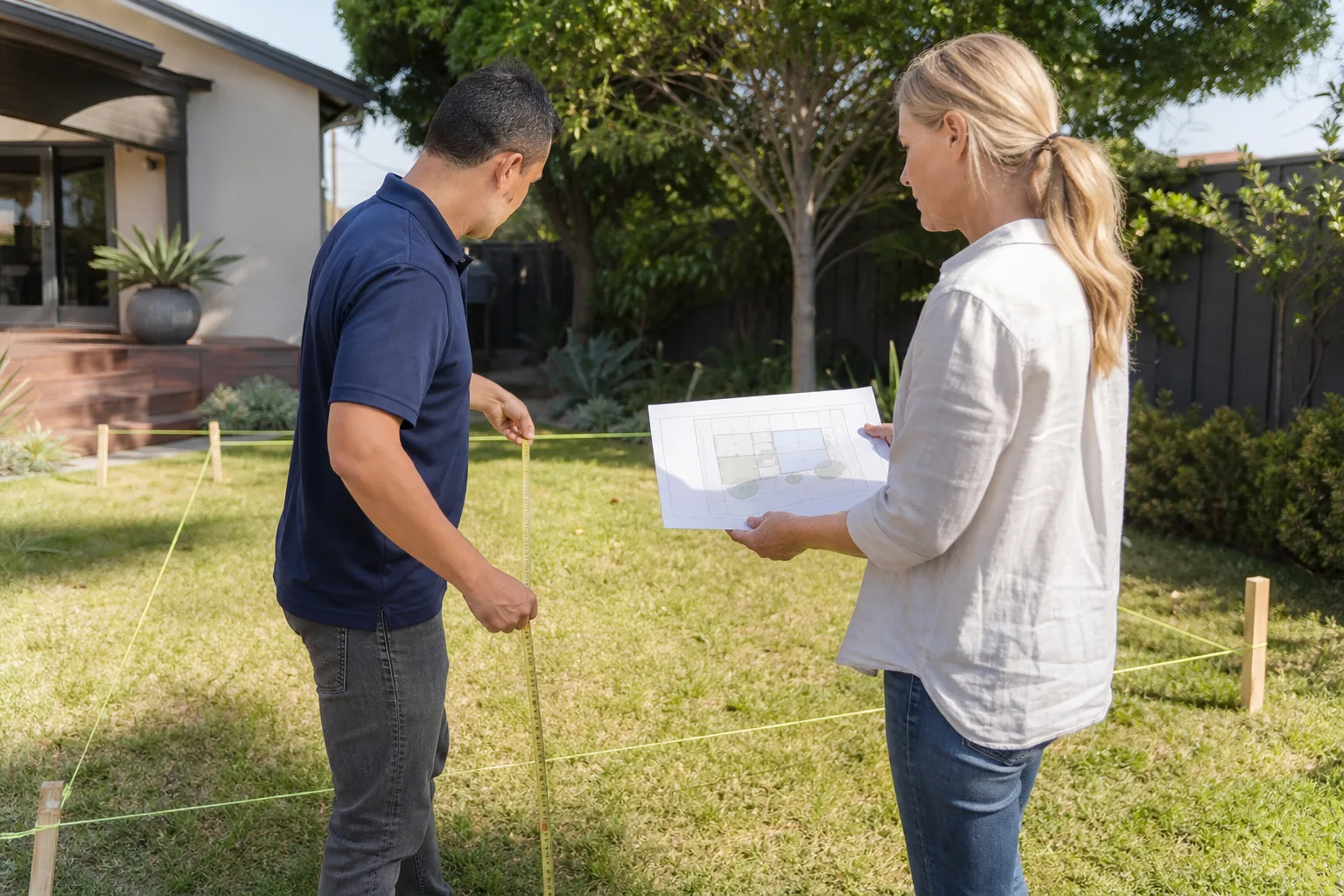
Before you spend a dollar on design or talk to a contractor, you can check the basics of your lot yourself. Sacramento County and the City of Sacramento both maintain public parcel portals, and the whole process takes less than ten minutes once you know where to look.
- Find your APN. Go to the Sacramento County Assessor’s parcel viewer and search by your street address. Your Assessor’s Parcel Number (APN) is a 14-digit identifier that every agency uses to reference your property.
- Open the City of Sacramento zoning map. Navigate to the city’s online zoning map, enter your APN or address, and note your zoning designation (for example, R-1, R-2, or RD-20). This determines your base ADU allowances.
- Check your lot dimensions. On the same parcel viewer, note your lot width, depth, and total square footage. A 5,000-square-foot lot in Curtis Park has very different ADU potential than a 7,500-square-foot lot in the Pocket.
- Identify existing lot coverage. Look at your garage, patio covers, sheds, and any additions. Add their footprints to your main house footprint. If the total exceeds 40% to 50% of your lot, a detached ADU may trigger a variance, which adds months and cost.
- Check for flood zone and tree ordinance overlays. Parts of Sacramento near the American River and Sacramento River are in FEMA flood zones that require elevated foundations. Tree protection ordinances in neighborhoods like Fab Forties may restrict where you can place a foundation.
- Verify your sewer lateral location. This one’s harder to self-check, but you can call the city’s utilities department with your APN and ask whether your sewer lateral is shared with a neighbor or runs under where you’d want to build. Shared laterals are a common complication in older Sacramento neighborhoods.
Running this check yourself saves you from paying for a feasibility study that tells you what you already know, and it puts you in a stronger position when you do talk to builders. You’ll know your constraints before they do.
The Three ADU Types in Sacramento: Costs, Sizes, and Timelines
Sacramento homeowners are building three types of ADUs, and the cost difference between them is significant enough that you should understand all three before committing. Here’s the plain-English breakdown with realistic 2025 cost windows for the Sacramento market.
Detached Backyard ADU
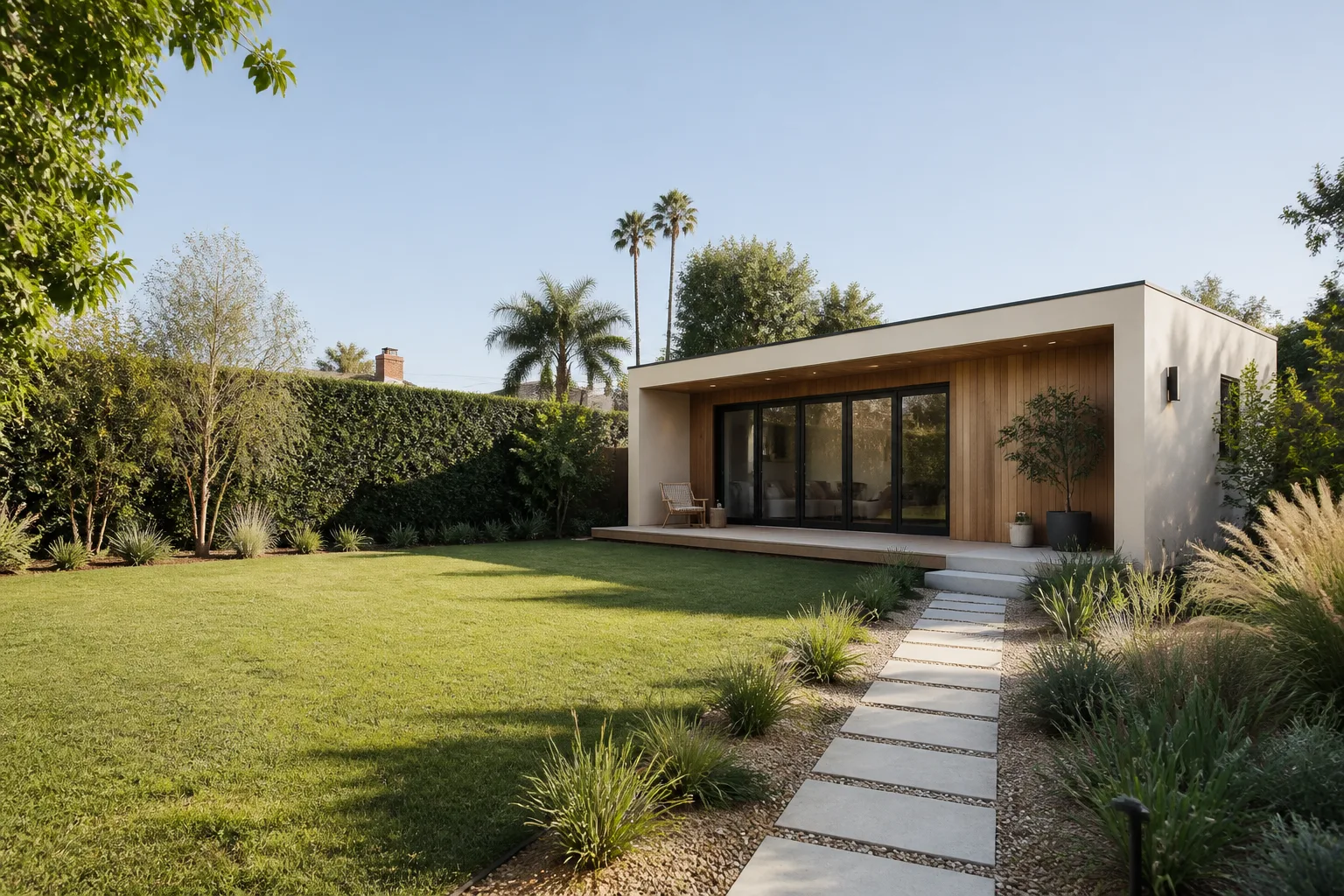
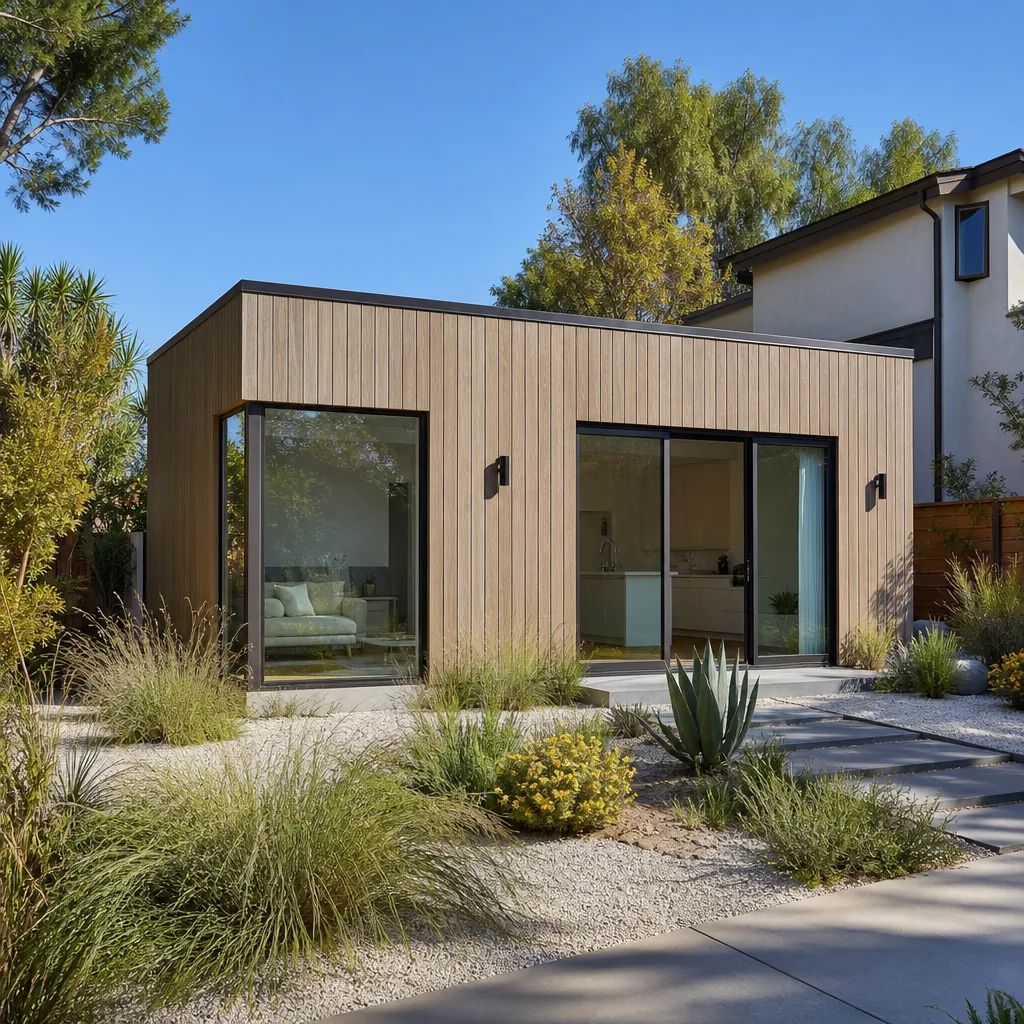
A detached unit is a standalone structure in your backyard, typically 400 to 1,000 square feet. These are the most expensive per square foot because they require new foundations, separate utility trenches, and full site work. In Sacramento, expect to pay $300 to $450 per square foot for a site-built detached ADU, putting most projects in the $180,000 to $400,000 range for a finished one-bedroom unit. Build time is 6 to 10 months from permit to occupancy.
We’ve seen a lot of Sacramento homeowners use prefab ADUs from manufacturers like Boxabl and Plant Prefab to shorten this timeline. A prefab one-bedroom from Plant Prefab typically runs $180,000 to $280,000 all-in with site work and utilities in the Sacramento area, but you need a lot with crane access and minimal tree interference. Boxabl units are smaller and simpler, usually 375 square feet, landing in the $120,000 to $200,000 range installed. The tradeoff with prefab is that Sacramento’s planning department still reviews them under the same ADU ordinance, so the permit timeline doesn’t compress as much as people hope.
Garage Conversion
A garage conversion turns your existing garage into a living unit, either a JADU or a full ADU. These run $150 to $250 per square foot, so a 400-square-foot two-car garage converts to a one-bedroom unit for $60,000 to $120,000. The structure already has a foundation, three walls, and a roof, so you’re paying mostly for insulation, electrical, plumbing, drywall, and new windows where the garage door used to be.
The catch in Sacramento: many garages in older neighborhoods were built on slabs without vapor barriers, which means you’ll need moisture mitigation before laying flooring. And if your garage is detached, you’re trenching utilities from the main house. Our Garage Conversion Contractor in Sacramento page covers the specific inspection points that matter for older garage slabs in this city.
Attached Addition ADU
An attached ADU is a new living space built onto the side or rear of your existing home, sharing a wall. These cost $250 to $350 per square foot, so a 600-square-foot attached unit lands around $180,000 to $250,000. The advantage is shared utilities: one sewer connection, one electrical panel serving both units, no separate trenching. The disadvantage is that you’re altering the roofline and foundation of your main home, which triggers more structural review. Use our home addition contractor maintenance checklist for Sacramento homeowners to stay on top of ongoing upkeep.
For attached work that expands your main house footprint, you may want to read through our Home Addition Contractor in Sacramento page to understand what the structural and foundation work actually involves.
The Sacramento Permit Process: Week-by-Week Reality
Sacramento’s permit process for ADUs has improved dramatically since 2020, but you should still plan for 3 to 6 months of permit-related work before construction starts. Here’s the actual sequence, with realistic timelines based on what we see in the city’s current review queue.
- Pre-application review (2 to 4 weeks). You or your designer submit preliminary plans to the city. A planner reviews them against zoning, setbacks, and lot coverage. This is where many projects get their first reality check on what the lot will allow.
- Plan check (4 to 8 weeks). Full construction drawings go through structural, electrical, plumbing, and mechanical review. Sacramento runs this through its ePlan system, and revisions are common. Budget at least one round of comments.
- Building permit issuance (2 to 3 weeks). Once plans are approved, you pay fees (typically $5,000 to $12,000 for an ADU in Sacramento depending on valuation) and the permit is issued.
- Utility release (2 to 6 weeks). Before you can start trenching or framing, SMUD (Sacramento Municipal Utility District) must approve your electrical service plan, and the city must clear your sewer connection. This is the step that blindsides people when sewer upsizing is flagged.
- Construction (4 to 8 months). Site work, foundation, framing, utilities, finishes. Detached units on the longer end, garage conversions on the shorter end.
- Final inspection and certificate of occupancy (2 to 3 weeks). The city inspects everything, and once passed, your ADU is legal to occupy or rent.
Total realistic timeline from first design meeting to move-in: 9 to 14 months. Anyone promising a Sacramento ADU in six months from scratch is either talking about a JADU conversion or omitting the permit queue from the conversation.
The Two Budget Surprises That Blindside Sacramento ADU Owners
Every ADU project has surprises, but in Sacramento there are two that show up on nearly every project we review, and they are both preventable if you check them before signing a contract. Here’s what they are and how to price them up front.
Sewer Lateral Upsizing
Your sewer lateral is the underground pipe that carries waste from your house to the city main in the street. Many older Sacramento homes were built with a 3-inch or 4-inch lateral, sized decades ago for a single household. Adding a second living unit with its own kitchen and bathroom often pushes the flow beyond what that pipe can handle, and the city will not issue a final occupancy permit until the lateral is upsized to 6 inches if required.
The cost to upsize a sewer lateral in Sacramento runs $8,000 to $15,000 depending on the distance from your house to the street and whether the existing lateral runs under a driveway or mature tree. The catch: you won’t know if your lateral needs upsizing until you have a camera inspection and flow calculation done. Get this done before you commit to a contractor, because it changes your overall budget materially. A reputable builder will insist on this assessment anyway. The ones who don’t mention it are the ones you should hesitate to sign with.
Electrical Panel Upgrade
Your ADU needs its own subpanel, and your main panel has to have enough capacity to feed both the main house and the new unit. Many Sacramento homes built between the 1950s and 1990s have 100-amp panels, which is not enough once you add a kitchen with an electric range, a mini-split heat pump, and laundry circuits. A panel upgrade from 100-amp to 200-amp runs $3,500 to $6,000 in the Sacramento area, and if your service drop from the pole needs to be replaced, add another $1,500 to $3,000.
SMUD will require a load calculation before approving your electrical plan. If you’re planning an all-electric ADU (no gas), which is increasingly common in Sacramento under new electrification codes, the panel requirements become even more critical. We recommend getting a SMUD service assessment and a panel evaluation as part of your pre-contract due diligence, alongside the sewer camera scope.
What ‘Permitted and Inspected’ Actually Protects You On
Some Sacramento homeowners consider skipping permits to save the $5,000 to $12,000 in city fees and the months of review time. We understand the impulse. But ‘permitted and inspected’ is not a bureaucratic nicety; it’s the thing that protects you on the three things that matter most after the build is done.
First, resale. If you sell your Sacramento home with an unpermitted ADU, California law requires you to disclose it, and buyers’ lenders will not count unpermitted square footage or rental income in their appraisal. That can cost you $100,000 to $200,000 in lost sale value on a market-rate transaction. Sacramento’s hot housing market does not protect you from this; appraisers and lenders are increasingly diligent about unpermitted space.
Second, insurance. If an unpermitted ADU has an electrical fire or plumbing failure, your homeowners insurance carrier can deny the claim based on undisclosed non-permitted work. This has happened in Sacramento more times than any of us want to think about. A permitted ADU with passing inspections is covered under a standard policy endorsement.
Third, rental legality. Sacramento County requires ADUs to be permitted and pass habitability inspections before they can be legally rented. If you rent an unpermitted unit and a tenant files a complaint, you can be ordered to stop renting, face fines, and be required to bring the unit up to code at your expense mid-tenancy. The economics of skipping permits rarely survive contact with reality.
Financing an ADU in Sacramento: Real Numbers
Most Sacramento homeowners finance their ADU through one of four paths, and the right choice depends on your equity, your timeline, and how you plan to use the unit. Here are the realistic numbers as of 2025.
A cash-out refinance on your primary mortgage allows you to borrow against the equity in your home. If you bought in Sacramento before 2020, you likely have substantial equity, and a cash-out refi on a $600,000 home with $300,000 in equity can fund a mid-range ADU entirely. The downside is that you’re resetting your primary mortgage rate, which may not be attractive in the current rate environment.
A HELOC (Home Equity Line of Credit) lets you draw against equity without refinancing your first mortgage. Sacramento credit unions including SAFE Credit Union and Golden 1 offer HELOCs specifically marketed for ADU construction, typically at prime plus 1% to 2%. You pay interest only on what you draw, which works well for phased construction payments.
Construction-to-permanent loans wrap your construction costs and permanent mortgage into one loan. These typically require 20% down and a fixed-rate conversion at completion. For a $250,000 ADU, that’s $50,000 in cash up front plus closing costs.
State and local programs exist but are limited. The California Housing Finance Agency’s ADU Grant Program previously offered up to $40,000 for pre-construction costs, but funding cycles are sporadic. Sacramento’s own ADU financing assistance has been dialed back since 2023. Check current availability through the city’s planning department, but don’t build a budget that depends on a grant.
Common Mistakes to Avoid
- Skipping the sewer lateral camera inspection before signing a builder. This $150 to $300 inspection reveals whether you’re looking at a $15,000 upsizing requirement that changes your whole budget. In older Sacramento neighborhoods like East Sac and Land Park, shared laterals are common and can delay utility release by weeks.
- Designing the largest ADU your lot allows without checking lot coverage math. A 1,000-square-foot detached ADU sounds great until you realize your mid-century home already uses 42% of lot coverage in a zone that caps at 50%. That leaves you with an 8% footprint to work with, not 1,000 square feet.
- Assuming prefab is faster end-to-end. Prefab units from manufacturers like Boxabl and Plant Prefab ship fast, but Sacramento’s permit review timeline doesn’t shrink just because the building was assembled off-site. You still face the same plan check, utility release, and inspection sequence.
- Not budgeting for the electrical panel upgrade. A $3,500 to $6,000 panel upgrade is one of the most common change orders on Sacramento ADU projects. Get a SMUD load calculation early and fold it into your fixed price.
- Choosing a builder who won’t put pricing in writing before work starts. If your builder gives a verbal estimate and says the written number comes later, you are setting yourself up for the exact scenario this guide exists to prevent. The Kingswell Way is simple: written price first, always.
- Ignoring flood zone and tree ordinance overlays during design. Parts of Sacramento along the American River floodplain require elevated foundations that add $20,000 to $40,000. Mature tree protections can push your footprint into a corner of the lot you didn’t plan for.
- Planning to rent the ADU without checking owner-occupancy requirements. Sacramento’s streamlined ADU approval assumes the owner lives on-site. If you intend to rent both units eventually, that changes your compliance path and possibly your financing.
When to Call a Professional
You can do a lot of homework on your own: parcel lookup, zoning check, rough budget, even preliminary sketches. Our DIY vs Professional ADU guide for Sacramento homeowners helps you decide when to call in the pros. But there are points where professional input saves you money, not costs you money. If your sewer lateral inspection shows an upsizing requirement, call an ADU builder who has managed utility upgrades before. If your lot is constrained by tree ordinances, flood zone overlays, or unusual geometry, you want someone who has navigated Sacramento’s planning department on similar properties. If you’re considering a prefab unit, you want a builder who has hands-on familiarity with the specific manufacturer’s installation requirements and Sacramento’s local inspection expectations.
Lodgewick ADU Sacramento offers free estimates in Sacramento. Call (279) 256-1973 to schedule yours. We’ll run through the parcel specifics, utility constraints, and budget reality on the first visit, with a written price before any work starts.
Frequently Asked Questions
Most ADUs in Sacramento cost between $180,000 and $450,000 all-in, depending on type and size. Garage conversions run $60,000 to $120,000, attached additions run $180,000 to $250,000, and detached backyard units run $180,000 to $400,000. These are 2025 Sacramento market ranges that include permits, utility connections, and finishes. For an exact quote on your specific lot, call (279) 256-1973 for a free estimate with a written price.
Plan for 9 to 14 months from design to occupancy in Sacramento. The permit process alone takes 3 to 6 months, and construction runs 4 to 8 months depending on whether you’re converting a garage or building a new detached structure. Prefab units don’t meaningfully compress the Sacramento permit timeline.
Yes, Sacramento allows ADU rentals as long as the unit is permitted, passes final inspection, and meets habitability standards. If you live on the property, you can rent the ADU under streamlined approval. If you want to rent out both the main house and the ADU, different rules apply and you should confirm your specific situation with the city’s planning department before committing to a build.
An ADU (accessory dwelling unit) is a fully independent living space with its own kitchen, bathroom, and entrance, either attached or detached from the main house. A JADU (junior accessory dwelling unit) is a smaller unit up to 500 square feet created inside the existing home, typically with a kitchenette rather than a full kitchen. JADUs cost $50,000 to $120,000 in Sacramento and require less permitting.
Usually yes. Most Sacramento homes with 100-amp panels will need an upgrade to 200-amp service to feed both the main house and the new ADU, especially if the unit is all-electric. Budget $3,500 to $6,000 for a panel upgrade in the Sacramento area. SMUD requires a load calculation before approving your electrical plan, so get that assessment early.
Many older Sacramento homes need their sewer lateral upsized from 3 or 4 inches to 6 inches when adding a second living unit. The cost runs $8,000 to $15,000 depending on distance to the street and site conditions. A camera inspection early in the process tells you whether this expense applies to your project. Call (279) 256-1973 to schedule a utility assessment before you commit to a builder.
The Bottom Line
Building an ADU in Sacramento is genuinely achievable for most homeowners, and the city’s rules are far more permissive than most people realize. The projects that succeed are the ones where the homeowner ran their parcel lookup, got their sewer lateral and electrical panel assessments early, understood the real permit timeline, and chose a builder who put every price in writing before work began. The projects that stall are the ones where those steps were skipped. If you’re ready to get started, the first step is a free estimate on your specific lot. Browse more guides & resources on ADU planning, financing, and construction. Call (279) 256-1973 and we’ll walk you through it.
Return to our Lodgewick ADU Sacramento home page for more on how we work.
Written by Russ Delmar, Owner at Lodgewick ADU Sacramento, serving Sacramento since 2010.